
Feeding the Easy Keeper and Metabolic Horse: Managing Weight Without Restricting Nutrition
An easy keeper holding too much weight isn't a horse that needs to eat less — it's a horse that needs to eat differently. Here's how to manage condition without shortchanging nutrition.
The easy keeper gets managed backward more often than any other body type I see. The instinct when a horse holds weight too easily is to cut back — less hay, a grazing muzzle, sometimes drastic restriction. The problem is that "eat less" and "eat differently" are not the same strategy, and for an easy keeper or metabolic horse, getting that distinction wrong has real consequences.
Easy Keeper and Metabolic Are Related, Not Identical
An easy keeper is a horse that maintains or gains weight on what would be a maintenance or even lean ration for an average horse — genuinely efficient at extracting calories from forage. Many easy keepers are metabolically completely normal; they're just efficient.
A metabolic horse — insulin dysregulation, Equine Metabolic Syndrome (EMS), or PPID with a metabolic component — has an actual endocrine issue layered on top of, or independent from, being an easy keeper. The overlap is large (many metabolic horses are also easy keepers) but they're not the same thing, and the metabolic horse carries a real health risk — laminitis — that a simply-efficient easy keeper without insulin dysregulation doesn't carry to the same degree.
The practical difference matters because the metabolic horse's diet has a hard constraint the plain easy keeper's doesn't: non-structural carbohydrate (NSC) content, not just total calories.
The Restriction Trap
Cutting total hay volume on an easy keeper is the most common mistake, and it backfires for two reasons. First, horses are trickle feeders — long periods without forage drive gastric ulcer risk and can trigger the exact anxious, food-seeking behavior (wood chewing, weaving, aggressive begging) that restriction is trying to avoid. Second, severe restriction alone doesn't address why the horse is holding weight — it just makes an already food-focused animal more food-focused, often while starving out protein, mineral, and vitamin needs the horse still has regardless of its calorie efficiency.
The better strategy: keep forage volume close to normal (or only modestly reduced), but change what kind of forage and how it's fed.
The Actual Levers That Work
Lower-calorie, lower-NSC forage. A mature, later-cut grass hay is typically lower in both digestible energy and NSC than an early-cut, leafy hay or anything with alfalfa mixed in. This is the single highest-leverage change for most easy keepers — same forage volume, meaningfully fewer calories and less sugar/starch.
Soaking hay. Soaking hay in water for 30–60 minutes measurably reduces water-soluble carbohydrate content — often by 20–30% or more, though it varies by hay. This is a standard, evidence-supported step for a confirmed metabolic horse, and a reasonable option for a borderline easy keeper too.
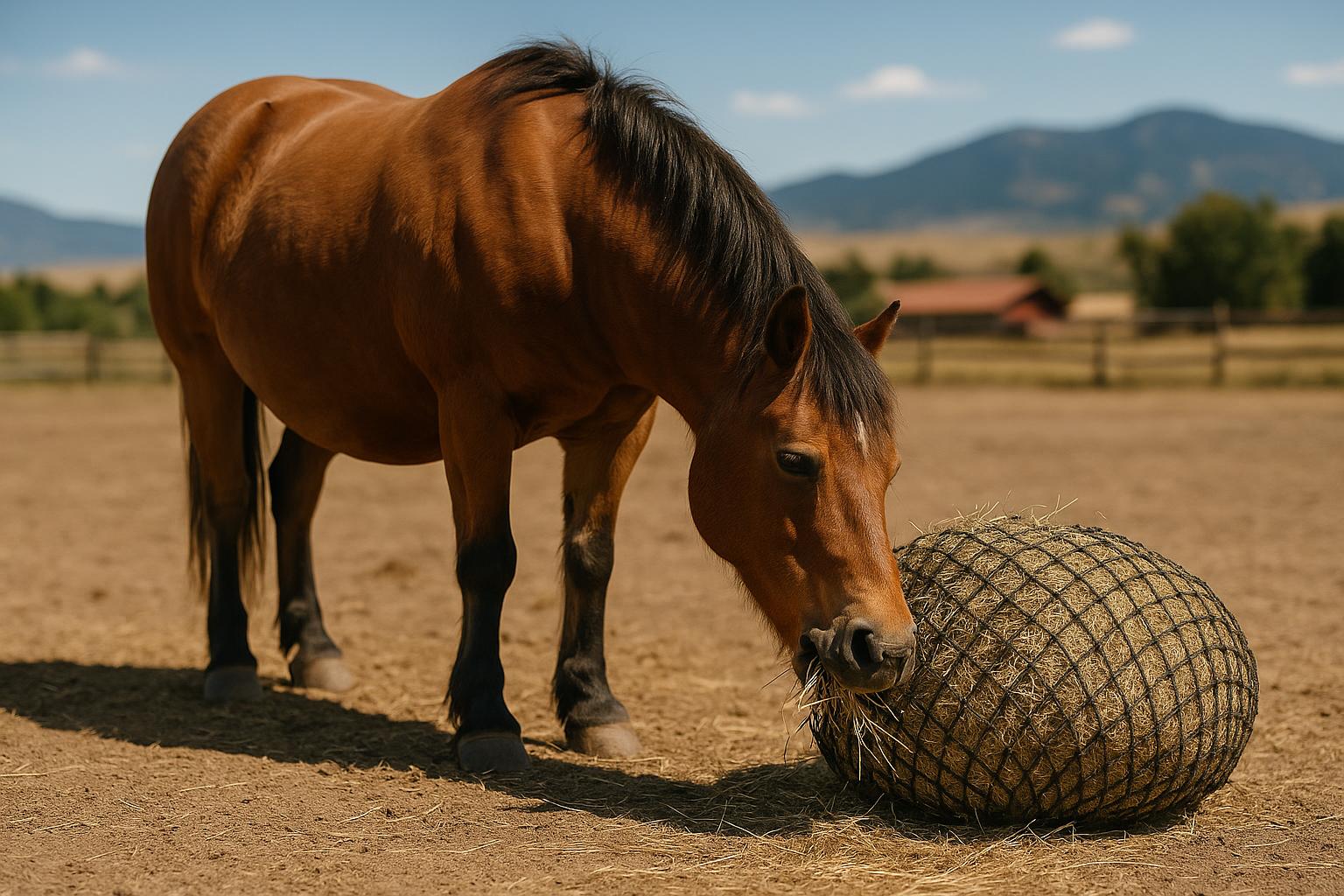
Slow-feed hay nets or multiple small piles. Rather than cutting total volume, slow the rate of intake. A small-hole slow-feed net can stretch the same volume of hay over several extra hours, keeping the horse chewing and occupied without adding calories — this addresses the behavioral and gut-health side of restriction without the metabolic downside.
Skip the concentrate — or choose specifically. Most easy keepers and virtually all metabolic horses don't need a calorie-dense concentrate at all. A low-NSC ration balancer (not a "senior" or "performance" formula, which often run higher in NSC) covers protein and mineral gaps without adding meaningful sugar or starch. Read the guaranteed analysis — NSC under roughly 10–12% is the general target for a confirmed metabolic horse; your vet may give a tighter number for a diagnosed case.
Exercise, where the horse's overall health allows it. Regular, appropriate exercise improves insulin sensitivity independent of diet changes. This isn't a nutrition lever exactly, but it's part of the same management picture and shouldn't be left out of the conversation.
Testing, Not Guessing
If you suspect a metabolic component — cresty neck, fat deposits over the tailhead or behind the shoulder, a history of laminitis, or a breed with known predisposition (many pony breeds, Morgans, and some Quarter Horse lines) — an actual test changes the plan. A resting insulin test, or a more sensitive oral sugar test, gives your vet real data rather than a visual guess. This matters because the dietary NSC ceiling for a confirmed insulin-dysregulated horse is genuinely stricter than for a horse that's simply an efficient easy keeper without a metabolic diagnosis — treating every easy keeper as if it has EMS can mean unnecessary restriction; treating a genuinely metabolic horse as "just an easy keeper" can mean missing a real laminitis risk. The forage-first approach that underlies all of this — see how the digestive system actually works — applies here too: get the forage tested before assuming you know what's in it.
Building the Program
- Get the forage tested — you need actual NSC numbers, not an assumption based on how the hay looks.
- Confirm or rule out a metabolic component with your vet if the visual signs are present.
- Choose forage type and prep (mature cut, soaking) based on the actual NSC target for your specific horse.
- Slow the rate of intake rather than cutting the volume, where practical.
- Skip or carefully choose a low-NSC ration balancer — most of these horses don't need a calorie-dense concentrate.
- Reassess with body condition scoring monthly, and retest metabolically if a diagnosed horse's management changes significantly.
If you're managing an easy keeper or a metabolic horse and want help building the actual numbers around your specific forage and horse, that's what a consultation is for.
Pure Horse Nutrition provides equine nutrition consulting and educational information. Montana Lowden is not a licensed veterinarian. The information and services provided are not intended to diagnose, treat, cure, or prevent any disease. Always consult your licensed veterinarian regarding your horse's health.
Montana Lowden
Certified equine and human nutritionist. AQHA World Show competitor and Canadian Nationals Horsemanship Champion. Based in Missoula, Montana.
More about MontanaGet articles like this in your inbox.
Bi-weekly notes from Montana — case studies, science, and what's actually working in the barn.