
Senior Horse Supplements: How Nutritional Needs Change With Age
Senior horse feed alone won't cover every gap. Here's how nutritional needs actually shift with age — and what targeted supplements your older horse needs.
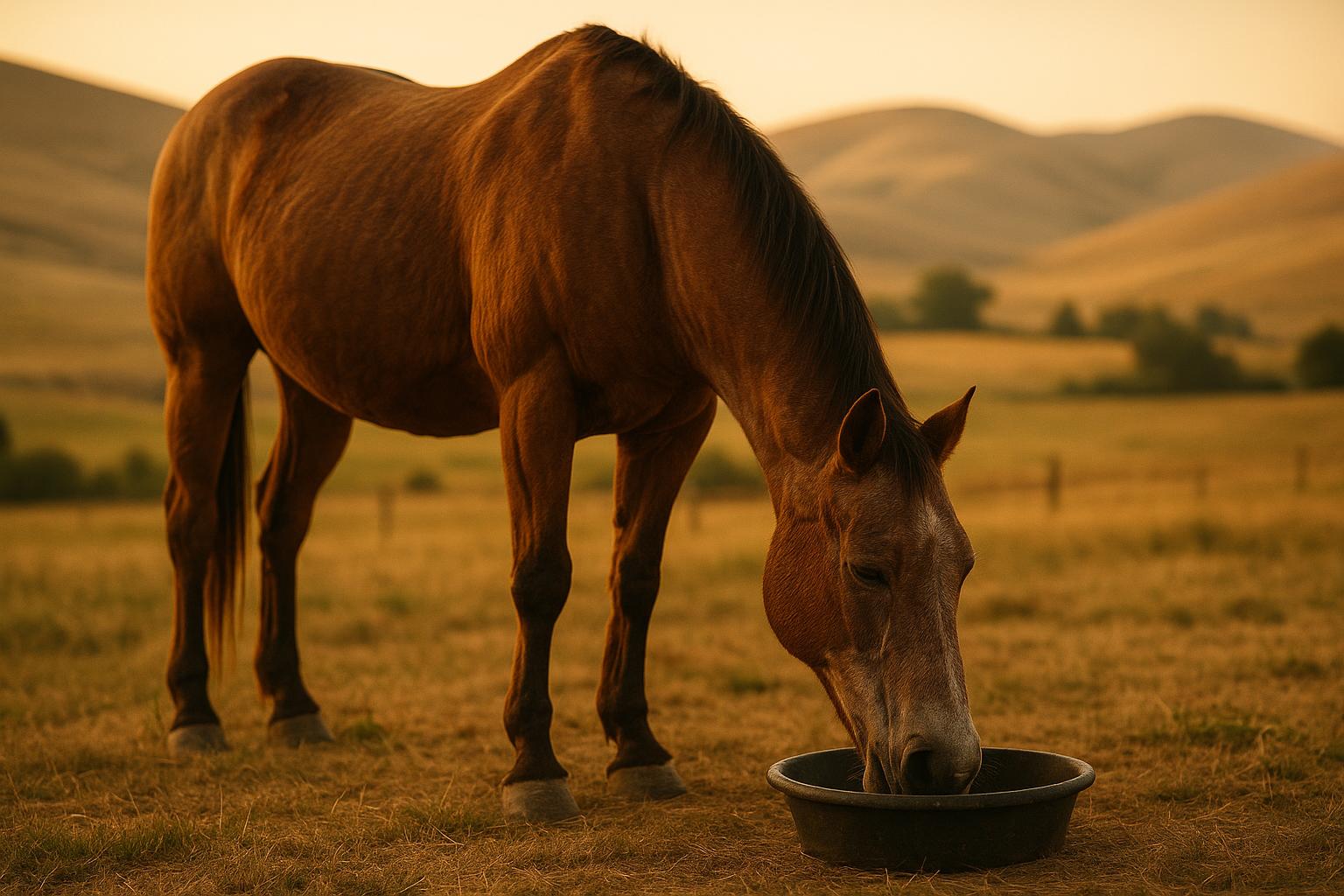
Your horse turned 18 and the barn manager suggested switching to a senior feed. You bought a bag, made the switch, and figured the problem was solved.
It's not that simple. And the supplement aisle isn't going to tell you that — because the supplement aisle wants you to buy more products, not fewer.
Here's what actually changes as your horse ages, why a bag of senior feed may or may not be the right answer, and how to build a targeted supplement strategy that addresses the real gaps instead of guessing.
What Actually Changes in the Aging Horse
Horses don't age on a fixed schedule. I've seen 14-year-olds with the metabolic profile of a 22-year-old, and 25-year-olds holding weight and condition like horses half their age. But there are predictable physiological shifts that start somewhere between 15 and 20 for most horses, and understanding them is how you stop throwing money at products and start addressing what's actually happening.
Digestive efficiency declines. The hindgut — where fiber fermentation happens and where your horse extracts the majority of its calories from forage — becomes less efficient with age. The microbial population shifts. Fiber digestibility drops. A horse that held weight easily on grass hay at 12 may start losing topline at 18 on the same hay, same amount, same workload. The forage hasn't changed. The horse's ability to extract nutrition from it has.
Dental capacity decreases. Horses' teeth erupt continuously throughout life, and eventually, the reserve runs out. Worn, missing, or loose teeth mean the horse can't grind long-stem forage effectively. Unchewed hay passes through without being properly fermented. You can feed all the hay you want — if the horse can't chew it, the calories aren't getting absorbed. This is the single most common reason older horses lose weight, and it's the one most owners underestimate.
Protein utilization changes. Older horses require more dietary protein to maintain the same muscle mass. Research consistently shows that senior horses need a higher crude protein percentage — closer to 14% — compared to the 10–12% that's adequate for a younger adult horse in moderate work. The issue isn't just total protein but amino acid quality. Lysine and threonine — the first and second limiting amino acids in equine diets — become more critical as the horse ages and protein turnover becomes less efficient.
Vitamin and mineral absorption declines. Phosphorus absorption drops measurably in horses over 20. Vitamin C synthesis — which horses normally handle on their own, unlike humans — may decline with age. Vitamin E requirements don't change, but horses that have spent years on stored hay without supplementation may have compounding deficiency that becomes clinically significant in their senior years.
Glucose handling shifts. This is the one that catches people off guard. As horses age, the risk of pituitary pars intermedia dysfunction (PPID, commonly called Cushing's disease) increases significantly — some studies estimate over 20% prevalence in horses over 15. PPID directly affects insulin regulation, cortisol production, and metabolic function. A horse developing PPID doesn't need more sugar and starch in its diet. It needs less. And many commercial senior feeds are higher in non-structural carbohydrates than the horse's changing metabolism can handle safely.
The "Senior Feed" Question
Commercial senior feeds exist for a reason. They're typically formulated with higher protein (12–14%), increased fat for caloric density, softer pellet or extruded forms for easier chewing, added vitamins and minerals at fortified levels, and sometimes pre- and probiotics for digestive support.
For a horse with significant dental problems who can no longer chew long-stem hay, a complete senior feed — one designed to be fed as the sole diet, replacing forage — can be a legitimate solution. That's a specific, defined situation.
But most owners aren't in that situation. Most owners have a horse that's aging, maybe losing a little topline, maybe not holding weight quite as well, and the senior feed bag feels like the right move. The problem is that switching to a senior feed without understanding why the horse is changing often means you're papering over a gap you haven't identified.
Before you switch feeds, answer these questions:
- When was the last dental exam? If the horse hasn't had a float in over a year, start there. A dental issue is a mechanical problem — no feed change fixes it.
- Has the horse been tested for PPID? A simple blood test (baseline ACTH, ideally drawn in fall when seasonal rise makes early cases detectable) tells you whether the horse's metabolic landscape has shifted. If PPID is present, the feeding strategy changes fundamentally — and a high-NSC senior feed may be the wrong direction.
- What does the forage analysis say? If you haven't tested your hay, you don't know what your horse is actually getting. A senior horse on high-quality hay with adequate protein and mineral content has different supplement needs than one on low-quality grass hay. Get the forage analysis before buying supplements.
The targeted approach — which is what I recommend to every client — starts with the forage, identifies the specific gaps the aging horse is experiencing, and fills those gaps with the fewest products at the right doses. Sometimes that includes a senior feed. Sometimes it doesn't.
Joint Support: The First Thing Most Owners Think About
Joint stiffness is visible. You see it when your horse takes a few extra steps to warm out of a stiff walk, when getting up from rolling takes longer, when the hind end looks a little shorter in stride. So joint supplements are usually the first thing an owner reaches for when the horse starts aging.
The evidence base for joint supplementation supports its use in horses with existing joint disease or age-related osteoarthritis — which describes most senior horses to some degree. The question isn't whether to support the joints. It's whether the product you're using is delivering enough active ingredient to matter.
Hyaluronic acid (HA), MSM, and glucosamine are the most common active ingredients. The clinical evidence is strongest for oral HA and for MSM at doses of 10,000–20,000 mg/day. Most commercial joint supplements deliver MSM at 5,000–8,000 mg. That's half the dose shown to be effective in research. Read the label. Do the math. Dose matters more than brand.
Omega-3 fatty acids — specifically EPA and DHA from marine sources — provide anti-inflammatory support that complements joint supplementation. Ground flaxseed gives your horse ALA, but horses convert ALA to EPA and DHA poorly. If the goal is managing inflammation in an aging horse, marine-sourced omega-3 is the more direct path.
Protein and Amino Acids: The Gap Nobody Sees
Topline loss in senior horses is one of the most common complaints I hear. Owners notice the back getting more prominent, the hindquarters losing definition, the neck looking thinner. The instinct is to add a weight-gain supplement or increase grain.
But topline is muscle. And muscle is protein.
If your senior horse is losing topline on adequate calories, the issue is almost always amino acid quality — not total caloric intake. Lysine is the first limiting amino acid in equine diets. If lysine is inadequate, it doesn't matter how much total protein the horse is eating — muscle synthesis stalls at the lysine bottleneck.
A senior horse needs approximately 14% crude protein with adequate lysine (at least 15–20 grams per day for a 1,100-lb horse). Most grass hays deliver 8–10% protein. The gap is real, and it's measurable if you have a forage analysis. A ration balancer formulated for senior horses, or a targeted amino acid supplement providing lysine and threonine, is often the most efficient way to close it — without adding unnecessary calories.
Vitamin and Mineral Adjustments
Vitamin E is non-negotiable for any horse without regular fresh pasture access, and senior horses are at compounding risk. Years of subclinical deficiency erode muscle membrane integrity. Natural vitamin E (d-alpha-tocopherol) has significantly higher bioavailability than synthetic (dl-alpha-tocopherol) — the form matters, and it should be on the label. Most senior horses benefit from 2,000–4,000 IU of natural vitamin E daily, particularly those on dry lot or stored hay year-round.
Phosphorus absorption declines in horses over 20. A forage analysis that shows adequate phosphorus for a younger horse may not be adequate for a senior. This is one of the few minerals where age-specific adjustment is supported by research — and it's one most commercial supplements don't address specifically.
Copper and zinc deserve attention in any senior horse program, particularly if the horse is on a high-iron forage (common with alfalfa-heavy diets). Iron competes with copper and zinc for absorption. A senior horse with a dull coat, slow hoof growth, or poor immune response may be experiencing copper/zinc suppression from iron overload — not a deficiency of the supplements being added. A mineral panel and forage analysis together tell the story.
Magnesium remains relevant for senior horses, especially those showing muscle tightness, anxiety, or difficulty relaxing. The same regional soil deficiency patterns that affect younger horses affect seniors — and the consequences of magnesium deficiency compound over time.
The PPID Factor: Why Metabolic Testing Changes Everything
I'm not going to diagnose PPID — that's your vet's job. But I will tell you this: if you're designing a nutrition program for a horse over 15 and you haven't tested for PPID, you're building on a foundation you can't see.
PPID affects cortisol regulation, insulin sensitivity, muscle metabolism, and immune function. A horse with undiagnosed PPID may be losing weight not because the diet is wrong, but because the endocrine system is disrupting how the body uses every calorie you're feeding. No supplement stack compensates for an untreated metabolic condition.
The practical implication for feeding: horses with PPID or insulin dysregulation need low-NSC diets — typically below 10% non-structural carbohydrates in the total diet. Some commercial senior feeds exceed this threshold. Soaking hay to reduce sugar content, choosing feeds formulated for metabolic horses, and monitoring body condition monthly become the baseline management practices.
Get the ACTH test. It's a simple blood draw. The results change everything about how I build a nutrition plan for that horse.
Building a Targeted Senior Supplement Strategy
The framework I use with every senior horse client follows the same methodology I apply to any horse — start with the forage, identify what's actually on board, resolve against the horse's documented needs, and measure whether the changes are working.
For senior horses specifically, here's the priority stack:
-
Dental exam and PPID testing — before any feed or supplement change. These are the two highest-leverage interventions for a senior horse, and neither one comes from a feed bag.
-
Forage analysis — know what the hay is delivering. If the horse can still chew long-stem hay, the forage is the foundation. If dental issues prevent adequate hay intake, a forage replacement (soaked hay cubes, chopped forage, or a complete senior feed) becomes the foundation, and you need to know what that product delivers.
-
Protein and amino acid gap — calculate whether the forage plus current feed delivers 14% crude protein with adequate lysine. If not, add a ration balancer or amino acid supplement. This is the gap most likely to explain topline loss.
-
Vitamin E — supplement natural vitamin E at 2,000–4,000 IU daily, especially for horses without regular pasture access.
-
Joint support — HA, MSM at effective doses (not label-minimum doses), and marine-sourced omega-3s if inflammation management is a priority.
-
Mineral balancing — copper, zinc, and magnesium adjusted based on forage analysis results, with attention to iron levels in the total diet.
That's six targeted interventions, each addressing a documented gap. Compare that to a supplement shelf with eight products and no clear rationale for any of them. Fewer products, right doses, real reasons. That's the goal.
When to Reassess
Senior horses change faster than younger horses. A body condition score that was stable for six months can shift in four weeks if dental function declines, if PPID progresses, or if forage quality changes seasonally. I recommend monthly body condition assessments for any horse over 18, with a full nutrition review at least twice a year — and immediately after any health event, medication change, or significant management shift.
If you're managing a senior horse and you're not sure whether the current program is working, that's exactly what I help with. A consultation starts with the forage, the horse's current program, and the specific changes you're seeing — and we build from there.
Pure Horse Nutrition provides equine nutrition consulting and educational information. Montana Lowden is not a licensed veterinarian. The information and services provided are not intended to diagnose, treat, cure, or prevent any disease. Always consult your licensed veterinarian regarding your horse's health.
Montana Lowden
Certified equine and human nutritionist. AQHA World Show competitor and Canadian Nationals Horsemanship Champion. Based in Missoula, Montana.
More about MontanaGet articles like this in your inbox.
Bi-weekly notes from Montana — case studies, science, and what's actually working in the barn.